

Mar
Self-Service Applications
Reverse Vending Machine: An In-Depth Look at Its Core Components
A reverse vending machine (RVM) is a key technology in modern recycling systems and deposit return schemes. These machines play an important role in global resource recovery by collecting, identifying, and processing beverage containers efficiently. Modern reverse vending machines combine mechanical systems, sensors, electronics, and intelligent software to recognise containers, sort materials, compact waste, and issue refunds automatically.
Understanding reverse vending machine components is important for engineers, system integrators, procurement managers, and sustainability professionals working with deposit return infrastructure. The interaction between mechanical hardware and digital control systems determines performance and reliability. User-facing components such as touchscreen displays, barcode scanners, and receipt printers also play a key role in creating a smooth and intuitive user experience.
The Role of Reverse Vending Machines in Modern Recycling Systems
A reverse vending machine is an automated system designed to accept empty beverage containers — typically plastic bottles (PET), aluminium cans, and glass bottles — and return a deposit or reward to the user.
These machines are typically deployed as part of a deposit return scheme (DRS). In such systems, consumers pay a small deposit when purchasing a beverage. When the empty container is returned to a reverse vending machine, the deposit is refunded automatically.
By automating container collection, RVMs ensure:
- Accurate validation of returned containers
- Efficient processing and sorting
- Transparent tracking of recycling data
The environmental impact of reverse vending machines is significant. By incentivising container returns, they dramatically increase recycling rates while producing a clean, pre-sorted stream of recyclable materials.
These high-quality material streams are far easier to reuse in manufacturing than mixed recycling waste. As a result, RVMs play a central role in the circular economy, where materials are reused repeatedly instead of discarded.
From a commercial perspective, reverse vending machines offer several advantages:
- Retailers meet deposit return regulations
- Stores increase foot traffic from returning customers
- Municipalities gain higher-quality recyclable materials
- Operators gain valuable recycling data for logistics and planning
The Mechanical Heart: Key Reverse Vending Machine Components

The physical processing of containers inside a reverse vending machine is the result of precise mechanical engineering. Each stage of the process is carefully designed to ensure speed, reliability, and safety.
Input and Receiving Module
The process begins when a user inserts a container into the machine’s input chute. This component is designed to guide containers into the system in a controlled way.
Some machines include conveyor belts or rotating systems that correctly orient containers before scanning. Safety sensors detect foreign objects or improper insertion to prevent jams and ensure safe operation.
Container Recognition System
Once inside the machine, containers move into a recognition chamber where multiple technologies work together to identify the item.
Typical recognition technologies include:
- Barcode or QR code scanners to identify the product
- High-resolution cameras to capture container shape and label details
- Weight sensors to verify container mass
- Material sensors (such as near-infrared detection) to identify plastic, aluminium, or glass
This combination ensures extremely accurate container identification and prevents fraud within deposit return schemes.
Sorting and Diverting Mechanism
After identification, the machine sorts the container according to its material type.
High-speed mechanical diverters direct containers into different channels using:
- Rotating gates
- Flippers
- Compressed air jets
This allows plastic, aluminium, and glass to be separated efficiently and stored in dedicated compartments.
Compaction and Crushing Units
To maximise storage capacity inside the machine, containers are often compacted. Plastic bottles and aluminium cans are flattened using mechanical compactors. Glass bottles are crushed into small fragments known as cullet.
This volume reduction allows machines to store significantly more material and reduces transportation costs when materials are collected.
Internal Storage Bins
After processing, containers are deposited into separate internal bins dedicated to each material type. Sensors monitor bin fill levels continuously. When a container reaches capacity, the machine sends alerts to operators so that materials can be collected before the system becomes full.
This ensures uninterrupted operation and reduces downtime.
The Intelligent Core: Electronics and Software in Reverse Vending Machines
While the mechanical systems process the containers, the electronics and software inside a reverse vending machine control the entire operation. These systems coordinate sensors, motors, user interfaces, and payout mechanisms, turning the machine into a smart and connected recycling solution.
Control Unit and PLC
At the centre of the system is the control unit, typically based on an industrial computer or programmable logic controller (PLC).
This unit processes data from sensors, runs the container recognition algorithms, and controls every step of the reverse vending process. From activating sorting gates to triggering compaction mechanisms and initiating payouts, the PLC ensures that all reverse vending machine components operate in synchronisation.
Reliable control systems are essential for maintaining high throughput while minimising downtime in high-traffic recycling locations.
User Interface Module
The user interface (UI) is the primary interaction point between the reverse vending machine and the consumer. Modern systems typically use large touchscreen displays that guide users through the deposit process with clear instructions and visual feedback.
High-quality displays — often portrait-oriented touchscreens ranging from 27″ to 32″ — improve usability while helping machines comply with accessibility standards such as the Disability Discrimination Act (DDA). These displays also provide valuable space for sustainability messaging, promotional campaigns, or retailer branding.


To support modern loyalty programs and digital refunds, many reverse vending machines integrate a customer-facing scanner such as the ECS-122NFC Barcode Scanner with NFC Reader. This allows users to scan a mobile app, loyalty card, or digital voucher to receive rewards or link their recycling activity to a personal account.
Sensor Systems
Beyond container recognition, reverse vending machines rely on an extensive network of sensors that continuously monitor the machine’s status.
These sensors include:
- Jam detection sensors along the container path
- Bin-level sensors that track internal storage capacity
- Security sensors that detect door openings
- Safety sensors that stop operation if interference is detected
Together, these systems ensure safe operation while helping operators maintain high uptime and predictable maintenance schedules.
Payout System
Once containers have been validated and processed, the reverse vending machine issues the deposit refund. The most common payout method is a high-speed thermal receipt printer, which produces a voucher that customers can redeem at a retail checkout.
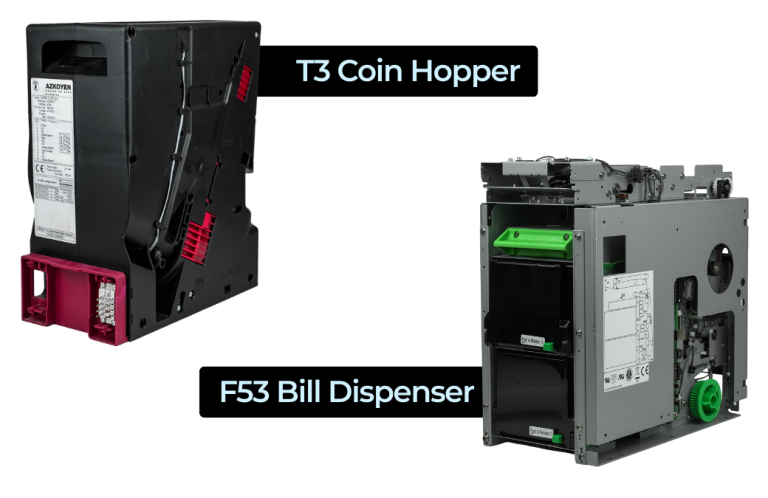
For deposit return schemes offering cash refunds, machines may also include payout hardware such as the T3 coin hopper for dispensing coins or a banknote dispenser such as the F53 for higher-value returns. Increasingly, these systems are also integrated with NFC readers and digital payment infrastructure, allowing refunds to be transferred directly to mobile wallets or loyalty accounts.
Reliable printing solutions such as the EP802-C or EP602-C thermal printers are commonly used for this purpose, ensuring fast and consistent voucher generation.


For deposit return schemes offering cash refunds, machines may also include payout hardware such as the T3 Coin Hopper for dispensing coins or a banknote dispenser such as the F53 Bill Dispenser for higher-value returns.
Increasingly, these systems are also integrated with NFC readers and digital payment infrastructure, allowing refunds to be transferred directly to mobile wallets or loyalty accounts.
The Integrated System: A Foundation for Sustainable Recycling
A modern reverse vending machine is far more than a simple recycling container. It is a highly integrated system where mechanical precision and digital intelligence work together to create an efficient recycling solution.
Every reverse vending machine component — from the input chute and sensors to the touchscreen interface and payout system — contributes to the machine’s overall reliability and performance. The mechanical systems provide the physical capability to handle containers, while the electronic control systems coordinate identification, sorting, user interaction, and refund processing.
As deposit return schemes expand worldwide and recycling infrastructure continues to evolve, reverse vending machines will remain a cornerstone of sustainable resource management. Their ability to transform everyday waste into valuable recyclable material makes them a key technology in building a circular economy.

Conclusion
Reverse vending machines rely on a combination of mechanical systems, sensors, control electronics, and user interface components to ensure accurate container recognition, efficient processing, and reliable payouts. Selecting the right hardware is essential for building machines that perform reliably in high-traffic recycling environments.
At Eurocoin, we support RVM manufacturers and integrators with professional displays, barcode scanners, printing solutions and more – designed for self-service applications. Want to learn more about the hardware behind modern reverse vending machines?
👉 Want to learn more about the hardware behind modern reverse vending machines?
Contact us to discuss your project or explore our components for self-service applications.


Join Our Newsletter and Stay Up To Date
Subscribe to recieve updates on our technology, services, sector developments, industry trends and much more.